
Marketing · November 22, 2026 · 5 min read
Marketing a new residential construction project in British Columbia requires strict alignment between promotional copy, visual assets, disclosure filings, and statutory warranty protections. To avoid compliance issues and maintain buyer trust from presale to key handover, developers and builders must ensure that every public statement directly reflects their legally documented specifications and warranty coverage.
Residential development in British Columbia operates within a well-defined regulatory framework designed to protect consumers and uphold market integrity. When creating promotional campaigns across the Lower Mainland—from multi-family developments in Surrey and Langley to boutique infill projects in Vancouver—builders must navigate two primary regulatory pillars: the Real Estate Development Marketing Act (REDMA) and the Homeowner Protection Act.
Under REDMA, overseen by the BC Financial Services Authority (BCFSA), developers are legally obligated to provide a disclosure statement that contains full, true, and plain disclosure of all material facts regarding the development property. Marketing materials, whether print brochures, project websites, or social media campaigns, cannot contradict or misrepresent the facts set out in that disclosure statement. A misrepresentation can provide buyers with statutory rescission rights or grounds for civil action.
Simultaneously, the BC Housing Licensing and Consumer Services branch regulates residential builder licensing and mandatory third-party home warranty insurance. Developer advertising must accurately describe the statutory warranty coverage attached to the dwelling without overstating what the mandatory policy covers.
In British Columbia, all new homes built by licensed residential builders must be covered by mandatory third-party home warranty insurance, widely referred to as the 2-5-10 warranty. While this warranty is standard across the province, marketing materials frequently describe it using vague or sweeping language that exceeds statutory terms.
The standard mandatory coverage breaks down as follows:
A common mistake in developer marketing is advertising "complete 10-year coverage on your home." Such statements imply bumper-to-bumper protection on interior finishes, fixtures, and appliances for a decade, which is not what the policy provides. Advertising copy should always use precise language, such as "Backed by standard 2-5-10 home warranty insurance under BC Housing regulations," and direct prospective purchasers to the specific policy terms provided by the warranty provider.
Visual marketing plays a central role in presale campaigns, but discrepancies between conceptual renderings and final construction represent one of the most frequent sources of buyer friction. When a project moves from the presale phase to completed spec inventory, marketing assets must transition accordingly.
Renderings frequently incorporate artistic license, showcasing mature landscaping, specific high-end millwork, or premium window package details that may evolve during construction due to supply chain changes, structural engineering revisions, or municipal permitting adjustments. While standard development contracts contain substitution clauses allowing developers to replace materials with items of equal or greater value, marketing representations that cross into material misstatement can present legal exposure.
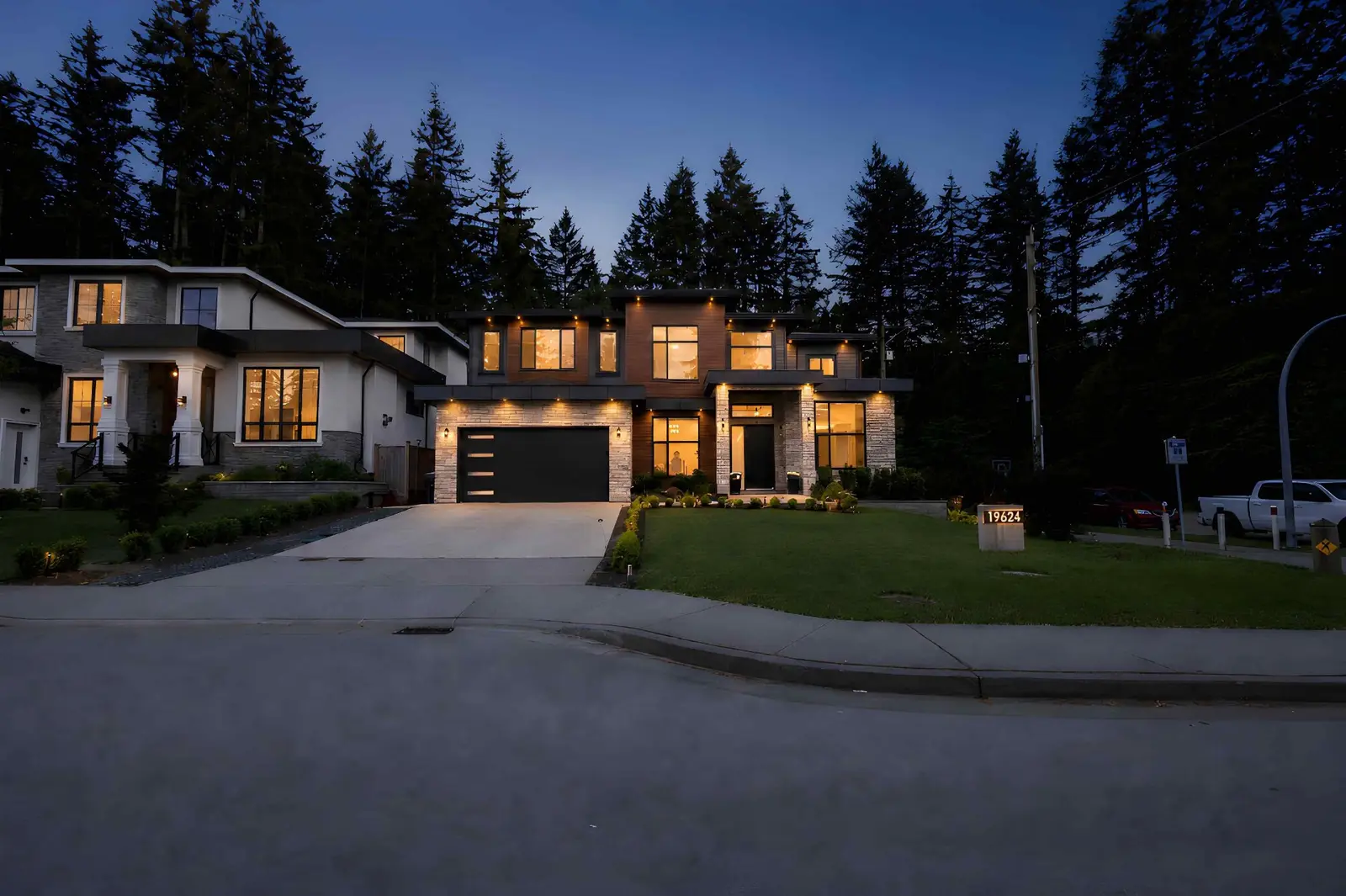
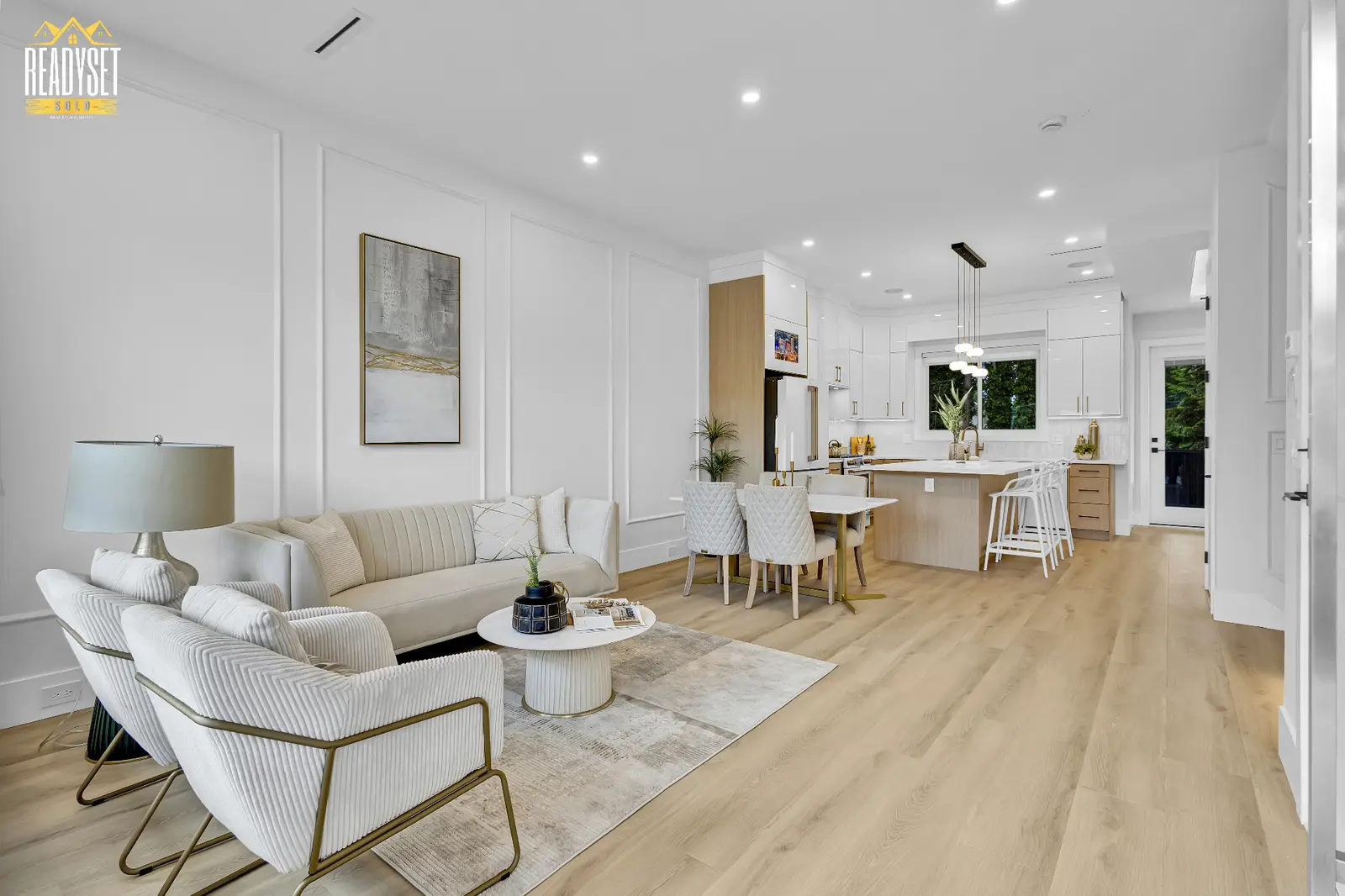
Once homes reach substantial completion, replacing architectural renderings with genuine, high-resolution professional real estate photography is critical. Capturing the authentic finish quality, accurate room dimensions, and actual exterior streetscapes provides transparent representation that protects developers from post-closing disputes. Prospective buyers can explore your portfolio of delivered projects through accurate visual assets, creating realistic expectations that align with the final walkthrough inspection.
Marketing teams, sales brokerages, and in-house copywriters often rely on conventional marketing shorthand that inadvertently creates compliance risk. Reviewing copy for the following specific pitfalls ensures your marketing remains compliant and factual:
Using terms like "custom-built" for a spec home built from an established plan set, or "ultra-luxury commercial-grade appliances" when builder-grade or mid-tier lines are installed, creates an immediate mismatch. Marketing language should identify specific brands, specifications, and certifications rather than relying on subjective exaggerations.
With municipalities across the Lower Mainland adopting higher tiers of the BC Energy Step Code, sustainability is a major selling point. However, claiming a home is "Net Zero Ready," "Passive House Certified," or "Energy Star Rated" without official third-party energy advisor modeling and certification introduces substantial regulatory risk. State the exact Step Code tier achieved or provide documented EnerGuide ratings verified by your licensed energy consultant.
Interior measurements must follow accepted industry standards. Discrepancies often arise when marketing floor plans include unfinished storage areas, open-to-below ceiling voids, exterior balconies, or garage spaces in the quoted "livable square footage." Marketing drawings should explicitly state whether measurements are gross exterior dimensions, finished interior floor area, or strata lot boundaries as defined in the disclosure statement.
Promoting nearby future transit lines, planned public schools, or upcoming commercial retail centres must be handled with care. Marketing copy must clearly state that off-site municipal infrastructure and third-party commercial developments are outside the developer's control and subject to change by local government authorities.
Before launching a marketing campaign across print, digital, or on-site sales centre channels, development teams should perform a structured audit using this verification sequence:
For builders operating in competitive regions like Surrey, Delta, Richmond, and Burnaby, a reputation for delivering exactly what is promised is one of the most valuable commercial assets. When marketing language aligns precisely with contractual documentation, warranty parameters, and real-world finishes, developers achieve several key outcomes:
First, transaction timelines remain smooth. When buyers arrive at their pre-delivery walkthrough (PDI) with expectations calibrated by accurate photography and factual marketing copy, deficiency lists are resolved more efficiently, reducing disputes prior to conveyance.
Second, sales teams and cooperating brokerages can represent properties with confidence. Licensees representing buyers have an obligation to verify material facts; providing clear, accurate feature sheets and marketing packages simplifies their due diligence process and accelerates contract signings.
Finally, clear documentation reduces administrative burden during the warranty period. When owners understand the exact boundaries of their 2-year system coverage versus 10-year structural protection, customer service teams can handle post-occupancy service requests promptly and professionally.
Precision in marketing copy must be paired with high-calibre visual media that reflects the true craftsmanship of your development. High-resolution interior photography, cinematic video walk-throughs, and detailed floor plans allow prospective purchasers to assess the layout, natural lighting, and architectural detailing of your projects with absolute clarity.
Whether you are marketing an individual custom home in South Surrey or launching a townhome phase in Langley, utilizing professional visual media ensures your presentation is polished, compelling, and grounded in reality. Learn more about our complete service offerings across our services page, and review our transparent pricing tiers on our pricing page.
To schedule professional photography, aerial imaging, or floor plan drafting for your upcoming residential build, contact our team today or visit our booking page to secure your shoot date.
Explore our photography service and local media coverage, or request an itemized quote.
#new construction #developer advertising #home warranty bc #real estate marketing #redma compliance
Rated 5.0 stars from 11 Google reviews — read our Google reviews.
Real estate photography, video, drone, floor plans and 3D tours across the Lower Mainland — listing photos delivered within 24 hours of the completed shoot; other delivery confirmed when you book.
Marketing · November 22, 2026 · 5 min read
Marketing · November 18, 2026 · 6 min read
Videography · November 16, 2026 · 6 min read