
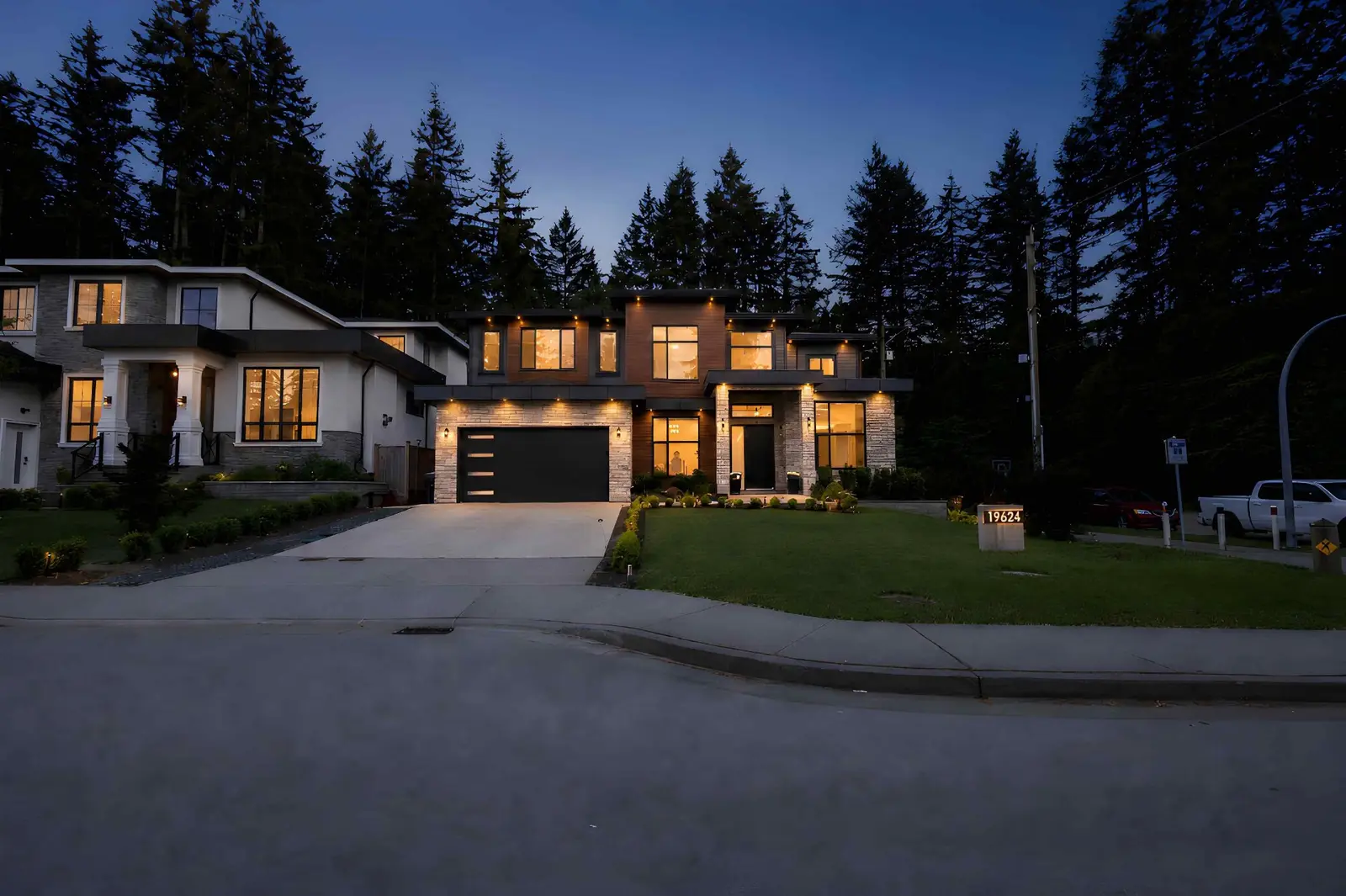
Marketing · November 22, 2026 · 5 min read
Framing a listing video for both vertical and horizontal platforms requires deliberate composition during production rather than hasty cropping in post-production. By protecting the central 9:16 vertical zone inside a wide 16:9 horizontal master frame, real estate agents across Surrey and the Lower Mainland can deliver immersive widescreen tours for the MLS and YouTube while simultaneously producing sharp, engaging social reels without scheduling separate video shoots.
Real estate video distribution has split into two distinct consumption habits. Traditional listing promotion relies heavily on horizontal (16:9) video. This format matches desktop monitors, television displays, web embeds, and traditional MLS listing pages. Horizontal video provides a cinematic feel that conveys the width, spatial volume, and architectural flow of living rooms, open-concept kitchens, and expansive backyards across neighbourhoods from South Surrey to Vancouver.
Conversely, mobile-first social media platforms prioritise vertical (9:16) video. Formats such as Instagram Reels, TikTok, and YouTube Shorts dominate smartphone screens, filling the entire display and commanding undivided attention. When agents evaluate vertical vs horizontal listing video, the challenge is not choosing one over the other; it is finding a production workflow that satisfies both distribution channels efficiently.
Attempting to shoot two completely separate walk-throughs during a single listing shoot doubles production time, increases homeowner disruption, and stretches marketing budgets. The solution lies in planning camera composition, movement, and lens choices so that a single filmed take cleanly produces both formats.
When capturing a 16:9 horizontal master frame with the intention of cropping the centre out for a 9:16 listing video, the camera operator is effectively working with two viewports simultaneously. The outer edges of the frame provide peripheral architecture for widescreen viewers, while the centre third contains the primary subject matter.
To ensure both formats look intentional rather than compromised, video production must follow strict composition protocols:
Understanding viewer behaviour across different platforms helps clarify why both aspect ratios are necessary for an effective property marketing campaign.
Reviewing our media portfolio illustrates how these two formats work in tandem to capture both broad search traffic and targeted social engagement across diverse listing styles.
Camera motion behaves very differently across aspect ratios. A pan or track that feels balanced on a wide screen can disorient viewers when cropped into a narrow vertical viewport. Adjusting movement techniques on set prevents footage from becoming unusable in the edit suite.
Fast horizontal pans are the fastest way to ruin a vertical crop. In 9:16, a panning camera creates severe motion blur and makes the narrow viewport whip past walls too quickly for the viewer to register the room. Forward push-in shots (dollying into a room) and steady backward pull-outs work smoothly across both 16:9 and 9:16, leading the viewer naturally along the architectural axis.
Keep the camera near chest height for general living spaces to maintain realistic eye-level perspectives. Excessive downward or upward tilt angles can distort vertical lines, causing walls and door frames to lean unnaturally when cropped tightly. Vertical videos accentuate keystoning errors, making vertical grid alignment on set critical.
In the debate over reels vs youtube, pacing is the key differentiator. A long-form horizontal tour allows for slow, continuous glidecam movements lasting four to six seconds per shot. A vertical social clip demands snappy two-second micro-shots. When shooting, operators capture extended takes with clear focal pauses, providing editors with the stability needed for horizontal flow and the concise beats needed for quick vertical cuts.
Before rolling camera on your next Lower Mainland property, review this practical production checklist to ensure your media assets can be repurposed across all marketing channels without friction.
Property styles vary significantly across British Columbia's Lower Mainland, and your aspect ratio strategy should match the architectural context. A compact one-bedroom condo in Burnaby, Richmond, or downtown Vancouver demands tight vertical framing that emphasizes finish quality, smart storage, and natural window light without revealing cramped dimensions. Vertical reels excel at guiding the eye through tailored urban spaces where square footage is optimized.
In contrast, executive detached residences in South Surrey, acreage properties in Langley or Abbotsford, and hillside homes in Coquitlam or Chilliwack rely heavily on horizontal dimension to showcase land mass, expansive floor plans, and sweeping mountain or water views. For these larger homes, a horizontal cinematic tour anchored by drone footage sets the master stage, while multiple vertical feature reels highlight bespoke zones such as spice kitchens, wine rooms, or covered outdoor living areas.
Understanding local market demographics and property layouts allows you to extract maximum return from your marketing investment. Learn more about our regional coverage throughout Fraser Valley and Greater Vancouver on our service areas page.
Shooting once to publish everywhere is not about cutting corners—it is about thoughtful, high-calibre media production that respects an agent's marketing timeline and budget. When an experienced real estate videographer plans camera paths with dual-aspect delivery in mind, you receive a full suite of marketing assets ready for immediate syndication across the MLS, YouTube, Instagram, Facebook, and TikTok.
Explore our comprehensive real estate video solutions on our videography services page, review transparent service packages on our pricing page, or reserve your next listing shoot directly through our online system to book your media session today.
Explore our videography service and local media coverage, or request an itemized quote.
#listing video #real estate marketing #video production #reels #videography tips
Rated 5.0 stars from 11 Google reviews — read our Google reviews.
Real estate photography, video, drone, floor plans and 3D tours across the Lower Mainland — listing photos delivered within 24 hours of the completed shoot; other delivery confirmed when you book.
Marketing · November 22, 2026 · 5 min read
Marketing · November 19, 2026 · 6 min read
Marketing · November 18, 2026 · 6 min read